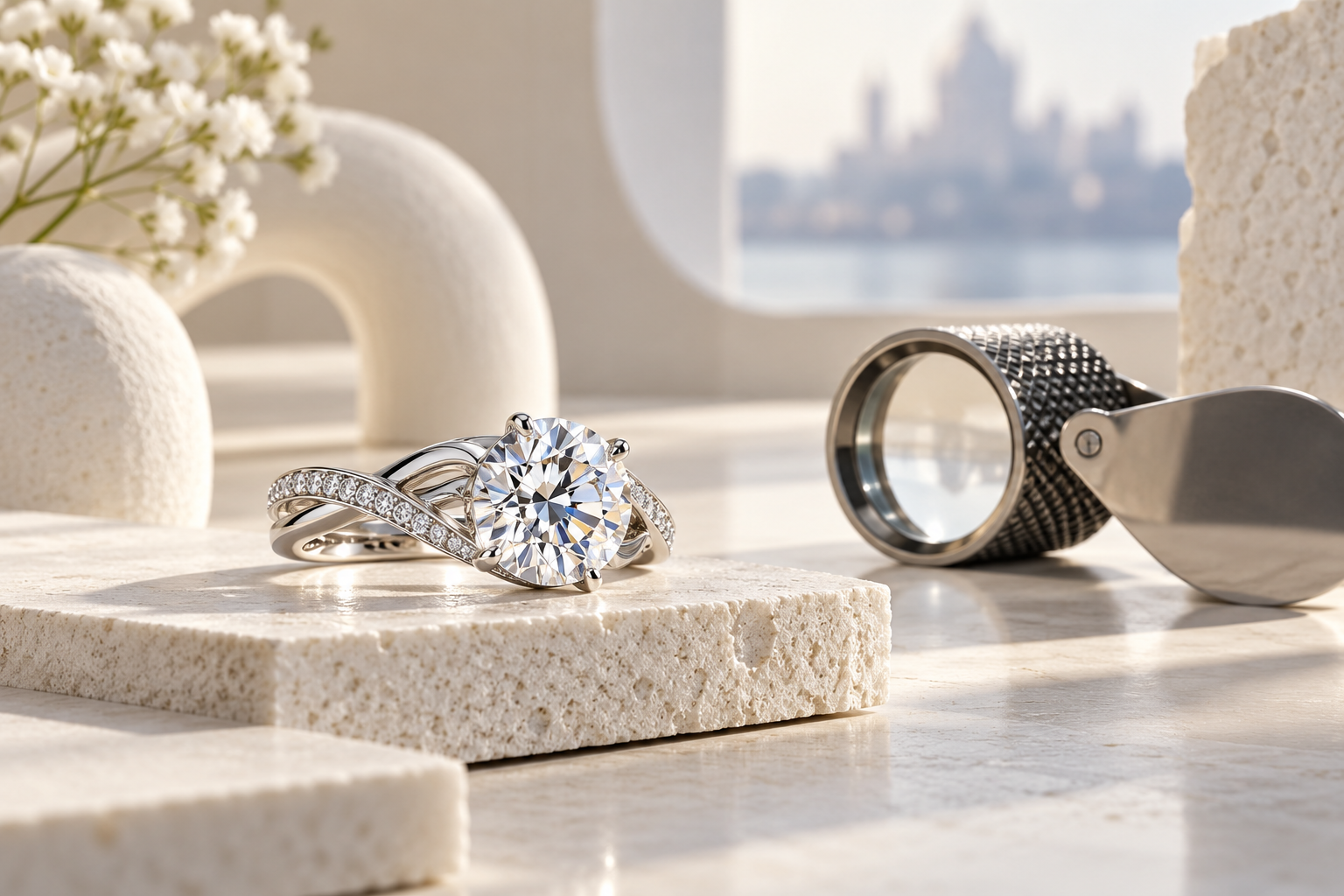
When a piece combines a diamond with a precious-metal setting, both parts deserve attention. The diamond's grading details tell you about the stone; the metal's purity mark tells you about the gold alloy. They are different specifications, and neither should be left vague on a product page or invoice.
Karat and fineness, in plain language
Karat describes the proportion of gold in an alloy. Fineness expresses that proportion in parts per thousand. For example, 18K gold is commonly marked 750, meaning 750 parts per thousand are gold; 14K is commonly 585, and 22K is commonly 916. These are purity designations for gold—not the carat weight used to describe a diamond.
Jewelry alloys include other metals to achieve the desired strength and color. White, yellow, and rose gold can therefore look different while sharing the same stated gold purity. Ask for the metal type and purity for the exact piece you are considering.
What a BIS hallmark tells you
BIS describes the current HUID-based hallmark as three marks: the BIS logo, the article's purity in caratage and fineness, and a unique six-character alphanumeric Hallmark Unique Identification (HUID) number. The BIS hallmarking FAQs list common grades including 14K (585), 18K (750), 20K (833), 22K (916), 23K (958), and 24KS (995).
If a piece is represented as BIS-hallmarked, inspect its marks and ask how they will be shown on the finished jewelry. The BIS Care app includes a “Verify HUID” feature for checking a hallmarked gold item. Follow the app's current instructions and compare the returned details with the item and its documentation.
A useful checklist for Indian buyers
- Confirm the metal (for example, gold or platinum) and the stated purity for the piece.
- Ask whether the item is BIS-hallmarked; if it is, ask where its hallmark and HUID can be seen.
- For diamond jewelry, request the diamond's origin, carat weight, shape, and grading-document details separately from the metal details.
- Review the invoice for a clear description of the jewelry, metal, stones, and price components.
- Before ordering a made-to-order design, confirm which specifications can be selected and which are fixed.
At i.Yuva, each product should make its metal and diamond specifications easy to find before you order. As the collection develops, check the individual product page for the exact metal purity and documentation offered for that design rather than assuming every item has the same specification.